Digital··4 min
UNICHE: a Bertrange SME leads €3.6M in European funding for cultural heritage
UniSystems Luxembourg, based in Bertrange, coordinates the European UNICHE consortium and has secured €3.6 million in Horizon Europe funding for a no-code platform dedicated to cultural heritage. The case is relevant to IT leaders seeking European funding and to Luxembourg's cultural institutions.
Translated from French · Lire l'original en français
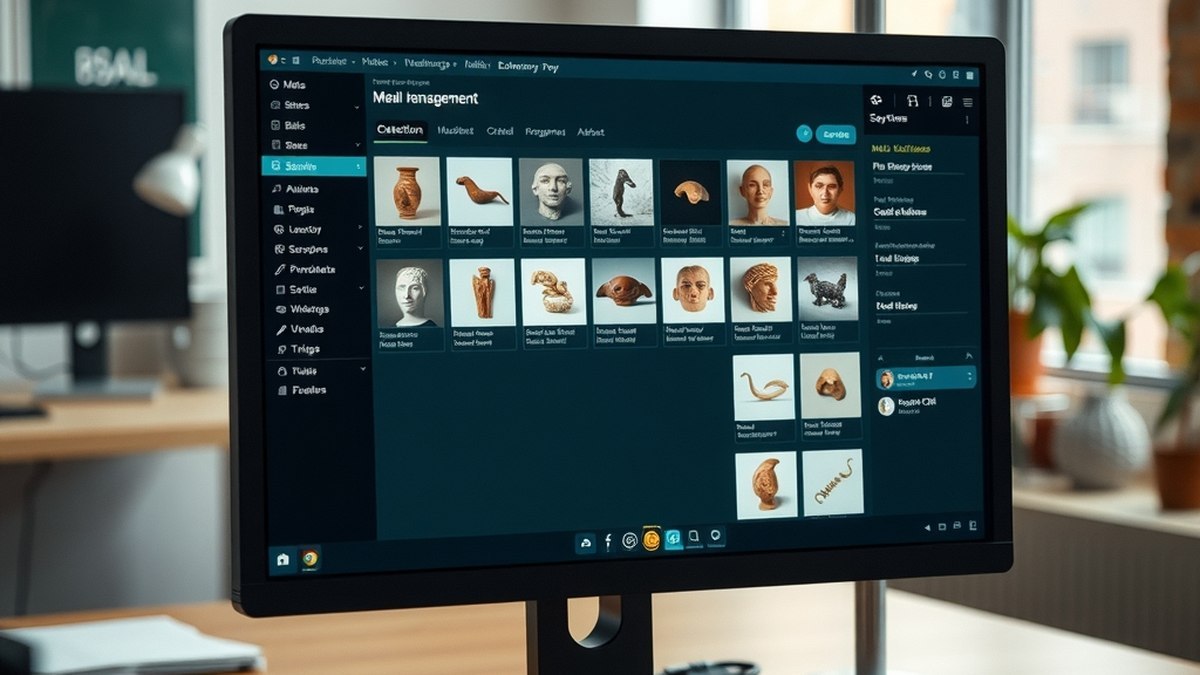
A company based in Bertrange is coordinating a consortium of twelve European partners and has just secured €3.6 million in Horizon Europe funding to build an AI-driven no-code platform dedicated to cultural heritage. The project speaks directly to Luxembourg IT leaders considering putting together a European consortium, and to the country's cultural institutions that might one day connect to it.
The UNICHE project at a glance
The UNICHE project is coordinated by UniSystems Luxembourg Sàrl, registered with the RCS (Trade and Companies Register) under number B225.406 and domiciled at Rue du Puits Romain in Bertrange, according to the project page published by CORDIS, the European Commission's database of EU-funded research projects. The stated goal: to build an AI-driven no-code platform for promoting digital cultural heritage.
| Item | Detail |
|---|---|
| Coordinator | UniSystems Luxembourg Sàrl (Bertrange) |
| EU funding | €3,608,915.55 |
| Grant reference | 101233650 |
| Call for proposals | HORIZON-CL2-2024-HERITAGE-ECCCH-01 |
| Duration | 1 October 2025 to 30 September 2028 (36 months) |
| Partners | 12 organisations in 7 European countries |
The funding comes under the HORIZON-CL2-2024-HERITAGE-ECCCH-01 call, a funding window specifically dedicated to building the European infrastructure for digital cultural heritage. The project runs for three years, until September 2028. Horizon Europe is the European Union's framework programme for research and innovation: it is through this channel, not a national grant, that the €3.6 million allocated to UNICHE is paid.
How a Luxembourg company builds a €3.6M European consortium
Securing this type of funding means bringing together partners in several countries, responding to a call structured around specific Commission priorities, and taking on administrative and technical coordination for the full duration of the project. This is the role UniSystems Luxembourg plays for the entire UNICHE consortium: coordinating twelve organisations across seven countries over three years, with responsibility for reporting and deliverables to the European Commission.
For heads of Luxembourg IT companies considering a similar approach, the national entry point remains Luxinnovation, the agency that supports the country's companies on Horizon Europe schemes. Before setting out to build a consortium, it is therefore wise to assess upfront how well the project fits an open call, how solid the potential partners abroad are, and how much time coordinating an international partnership over several years will require. The UNICHE case shows that a company based in the Grand Duchy can take on the role of coordinator, not merely partner, on a project of this scale.
The ECCCH, the European infrastructure behind the platform
UNICHE connects to the European Collaborative Cloud for Cultural Heritage (ECCCH), a Horizon Europe infrastructure with a budget of around €110 million according to the European Commission. This infrastructure aims to network digital cultural heritage content, tools and data at European level. UNICHE is one of the projects that feed into and connect to this shared infrastructure. In practice, the ECCCH works as a shared access point for European museums, archives and archaeological sites: each funded project, UNICHE included, contributes its own content and tools rather than building an isolated platform.
A second Luxembourg partner and pilot sites elsewhere in Europe
The consortium includes a second Luxembourg entity alongside UniSystems: Museotek S.A., a subsidiary of the MuseotekBox platform, according to Silicon Luxembourg. The project plans pilot sites outside the Grand Duchy to test the platform in the field:
- the Galileo Museum in Florence
- the Museum of Architecture in Wrocław, Poland
- the archaeological site of Ugento, Italy
- the archaeological site of Kalapodi, Greece
No pilot site has been announced in Luxembourg so far, but the presence of two Luxembourg entities in a consortium of this size places the country at the heart of building this European infrastructure.
What this could mean for Luxembourg's cultural institutions
For institutions such as the Musée national d'histoire et d'art, the Villa Vauban or Mudam, the existence of a European no-code platform connected to the ECCCH is something to watch, although no Luxembourg partnership or pilot has been announced to date. The presence of Museotek S.A. in the consortium does, however, offer a local point of contact already active in this field, for institutions wishing to keep track of the project's progress through to 2028.
The selected pilot sites, in Florence, Wrocław, Ugento and Kalapodi, will allow the platform to be tested on museum collections and on open-air archaeological sites, two contexts different enough to give an idea of the versatility the consortium is aiming for. There is no indication at this stage that a Luxembourg site will join this list over the next three years, but the project's progress remains worth following for the country's institutions.
This momentum is part of a broader movement towards digitalising professional practices in Luxembourg, where companies and institutions are seeking to adopt structuring digital tools, whether content management platforms or cloud infrastructures shared at European level. For the marketing and communication teams of cultural institutions, the question raised by UNICHE is less about the technology itself than about timing: at what point does a tool designed for Florence, Wrocław or Kalapodi become relevant for a Luxembourg collection.