Digital··4 min
Why reading an online B2B magazine has become essential for Luxembourg executives
Print is declining and trust in news is eroding. How a digital B2B media outlet remains useful to Luxembourg decision-makers in 2026.
Translated from French · Lire l'original en français
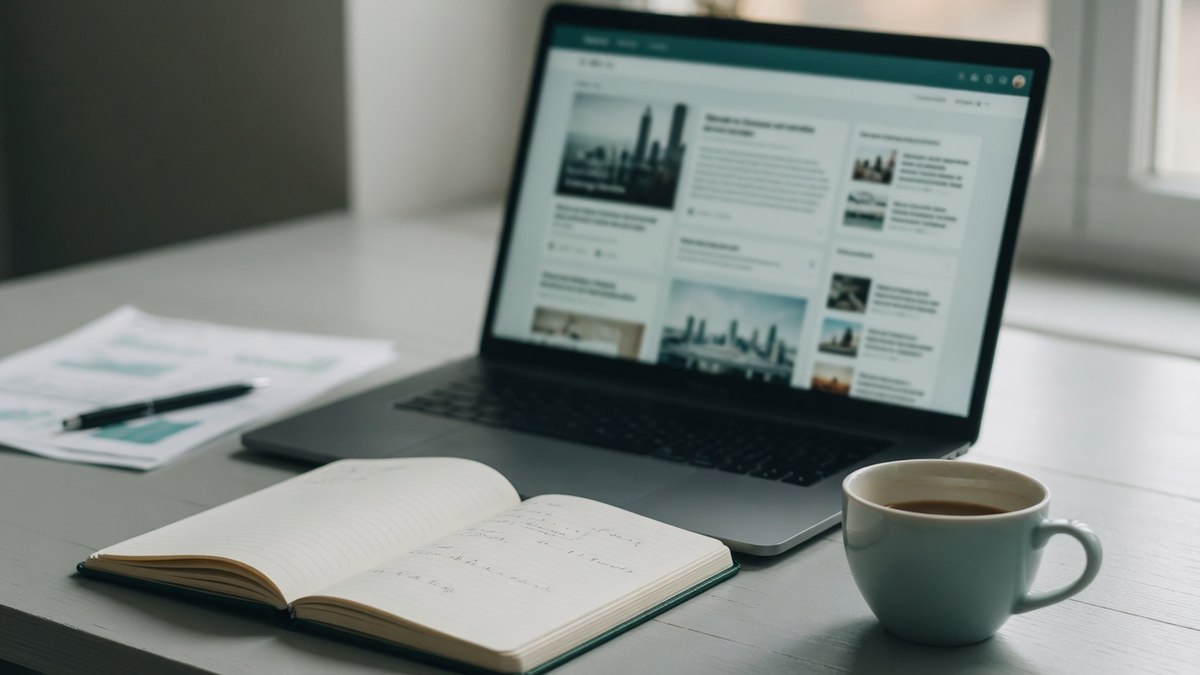
Only ten years ago, a Luxembourg executive would start the day with a folded daily newspaper under one arm. In 2026, the day starts with a screen, often before even reaching the office. This shift is not just a matter of format: it changes how business information circulates, how it is checked and how it turns into decisions.
The figures leave no room for doubt. The Luxemburger Wort, taken over by the Belgian group Mediahuis in 2020, now reports paid circulation of around 44,000 copies, including nearly 9,000 digital subscriptions, compared with more than 52,000 print copies in 2018. The Tageblatt saw its regular readership fall from 47,400 people in 2012 to 39,000 in 2017. And according to CIM figures cited by Reporter.lu, paid circulation of the weekly Télécran almost halved between 2018 and 2026, from 20,706 to 10,232 copies. The move to digital does not fully offset the erosion of print, but it redraws where and how information actually reaches decision-makers.
Print is declining, reading is not disappearing
This is not the end of professional reading, it is the end of a format. The Luxembourg State has supported the press since 1976, a support scheme strengthened by the law of 30 July 2021 in favour of professional journalism, precisely because quality information is expensive to produce, whatever the medium. For an executive, the question is no longer “papier ou numérique” (“print or digital”) but “quelle source me fait gagner du temps et reste fiable” (“which source saves me time and remains reliable”).
Trust, the new number one issue
The latest Reuters Institute Digital News Report, published in June 2026, paints a picture that directly concerns decision-makers: trust in news has reached a historically low level, around 37%, and deliberate news avoidance is rising further, at 42%. Even more striking, social media and video platforms have for the first time overtaken all other sources as the main channel for accessing news, with 54% of global audiences.
For a business owner or a marketing manager in Luxembourg, this landscape has a direct consequence: the LinkedIn feed and recommendation algorithms do not replace structured monitoring. They feed into it, but without hierarchy or systematic verification. Telling sourced information apart from viral content is becoming a professional skill in its own right.
What an online B2B media outlet changes for an executive
A digital magazine dedicated to businesses provides three things that a generic social feed does not naturally offer.
- Useful speed: a regulatory update, a figure published by Statec or a decision by the CSSF can be covered within hours rather than waiting for the next printed issue.
- Sector filtering: rather than drowning readers in a general-interest feed, a B2B media outlet focuses on what really affects Luxembourg tech, digital and marketing, a market small and specific enough for local context to matter as much as the news itself.
- Source traceability: naming an institution, a regulator or a study remains, amid widespread distrust of the media, what separates actionable information from content to be treated with caution.
How to read usefully in 2026
With channels increasingly fragmented, a few simple habits help a decision-maker stay informed without wasting time. Favour newsletters and websites you actively choose over the feed an algorithm chooses for you. Check that the article cites an identifiable source, an institution, a regulator, a study, rather than a vague phrase such as “selon des experts” (“according to experts”). Accept that an in-depth article, longer than a LinkedIn post, takes a few extra minutes but saves you from having to cross-check the information yourself afterwards. And bear in mind that in Luxembourg, the local regulatory and economic context often changes the practical significance of news that elsewhere would remain anecdotal.
The spirit of a Luxembourg B2B magazine
This balance between digital speed and in-depth rigour is what Beast Magazine aims to strike: covering tech, digital and marketing from the perspective of businesses in the Grand Duchy, with named sources and concrete usefulness for those who have to make decisions. The move from paper to screen is not a loss, it is a change of tool. Provided we keep demanding from this new tool what the best journalism has always promised: verified facts, a clear hierarchy, and context that enables action rather than simply scrolling through a news feed.
For a Luxembourg executive, the question is therefore no longer whether information should be read online, that is already settled, but which sources deserve their trust and time, chosen deliberately.