Digital··4 min
Selling online in Luxembourg: the business permit explained
Selling your own creations on a dedicated website or running an online shop in Luxembourg triggers, in most cases, the obligation to obtain a business permit (autorisation d'établissement). Here is the five-step compliance test for any executive or e-commerce project owner.
Translated from French · Lire l'original en français
Opening an online shop, selling your own creations on a dedicated website or simply running a stand at a fair: in Luxembourg, these activities can trigger a legal obligation that many project owners are unaware of. Here is the five-step compliance test to find out whether your online selling project requires a business permit (autorisation d'établissement), and how to obtain one.
The trigger: when the permit becomes mandatory
The legal basis leaves no room for doubt. According to the consolidated text published on Legilux, the amended law of 2 September 2011 prohibits carrying out a commercial activity on a professional basis, including online, without a prior business permit. This principle applies to any form of selling, physical or digital, as long as it constitutes a professional activity.
Guichet.public.lu adds an essential clarification on its page dedicated to commercial activities and services: a person who sells their own creations is in principle exempt from the permit. However, this exemption no longer applies as soon as a dedicated website is operated or the person takes part in a fair or market, at which point the permit becomes mandatory. An amateur maker who opens a Shopify shop or books a stand at the Christmas market therefore falls, legally, under the same regime as an established online retailer.
The three cumulative conditions to meet
Before submitting an application, guichet.public.lu points out that three conditions must be met at the same time: the applicant's professional integrity, a professional qualification where the activity requires one, and a stable and genuine establishment in Luxembourg. On this last point, the administration is explicit: it cannot be a mere letterbox, and the establishment must be actively and permanently managed by the permit holder. For an e-commerce project, this means having a genuine operating address in Luxembourg, even if sales take place online.
The procedure on MyGuichet.lu
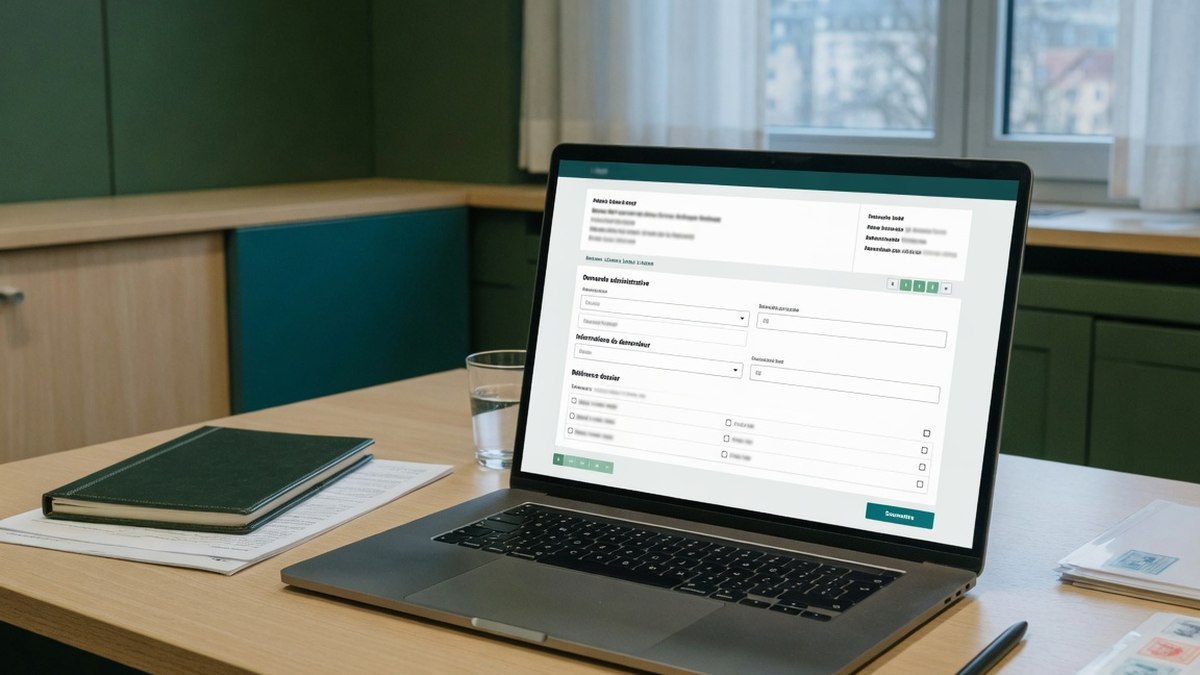
The application can only be submitted online. According to guichet.public.lu, it goes through the professional space of MyGuichet.lu, with LuxTrust authentication, and is addressed to the Direction générale des classes moyennes (Directorate General for SMEs) of the Ministry of the Economy. The chancery fees amount to €50 for a standard business permit, and the file must be complete to be processed, with the administration's silence after a set period counting as a decision. It is best to plan this step ahead of any commercial launch date.
Once the permit has been granted, a display obligation applies: the barcode or QR code associated with the permit must appear on the company's website, as well as on its invoices, quotes and emails, guichet.public.lu specifies. For executives unsure which office to turn to next for related formalities, our article on the House of Entrepreneurship details which doors to knock on depending on the company's stage. Further reading on this topic: Registering a .lu domain name.
Occasional seller or regular online retailer: the Hobbymaart case
Not all occasional sales fall under the same regime. The Chambre de Commerce describes, on cc.lu, a lighter scheme called Hobbymaart, intended for people who sell occasionally at fairs or markets without making it a regular commercial activity.
| Criterion | Standard permit | Hobbymaart |
|---|---|---|
| Target audience | Online retailers and regular sellers | Occasional sellers at fairs/markets |
| Cost | €50 in chancery fees | Reduced fees |
| Processing time | Depends on a complete file, silence counting as a decision after a set period | About 3 weeks |
| Authority | Direction générale des classes moyennes | Direction générale des classes moyennes |
The line between the two regimes depends on the regularity and scale of the activity. A merchant website open on a permanent basis falls under the standard permit; occasional participation in a makers' market may fall under the Hobbymaart regime, according to the Chambre de Commerce.
The risks of an undeclared activity
Carrying out a commercial activity, including online, without a business permit exposes the operator to criminal penalties, fines and prison sentences, as provided for by the law of 2 September 2011, according to the consolidated text on Legilux. The risk is therefore not limited to a belated compliance exercise: it is a criminal offence, which justifies handling the procedure before the launch rather than after the first sales.
Checklist before launching your online sales
- Check whether your project involves a dedicated website or participation in a fair/market, which triggers the permit obligation
- Meet the three cumulative conditions: professional integrity, qualification where required, stable and genuine establishment in Luxembourg
- Create a MyGuichet.lu professional space with LuxTrust authentication before submitting the file
- Identify your situation: regular online retailer (standard permit, €50) or occasional seller at fairs/markets (Hobbymaart regime)
- Plan to display the permit barcode or QR code on the website, invoices and emails as soon as it is obtained
This article sets out the general rules as published by Guichet.public.lu and Legilux on 21 August 2026. It does not constitute personalised legal advice: for any specific situation, particularly if you are unsure how your activity should be classified, contacting the Direction générale des classes moyennes directly or a legal professional remains advisable.