Digital··10 min
CRM for SMEs in Luxembourg: how to choose and fund one
Choosing a CRM for an SME in Luxembourg involves much more than comparing features: you also need to activate the right public support schemes and secure a GDPR-compliant contract with the chosen vendor.
Translated from French · Lire l'original en français
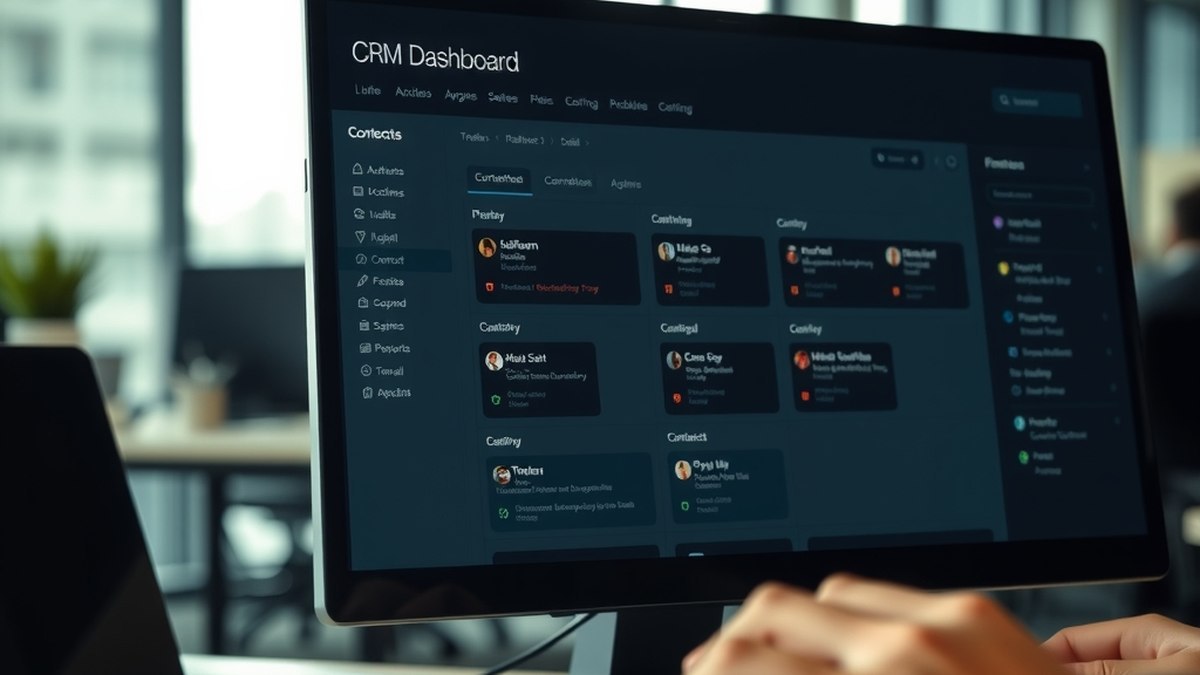
Finding a CRM for an SME in Luxembourg is not just a matter of comparing Salesforce, HubSpot or Pipedrive on a feature grid. Most comparisons available online are written for the French or American market: they ignore the Luxembourg definition of an SME that determines access to aid, the public schemes that can fund up to 70% of the project, the GDPR framework specific to the CNPD, and the vendors based in the Grand Duchy. This guide takes each step in the order a Luxembourg business leader needs to address it: am I eligible, what does it really cost, what contract should I sign, and what type of tool should I choose. It is aimed at managers and sales leads of SMEs established in Luxembourg who are about to budget for a first CRM or replace a tool that no longer fits.
CRM for SMEs: an especially strategic choice in Luxembourg
A CRM (Customer Relationship Management) system centralises contacts, sales opportunities and customer history in a tool shared by the sales, marketing and customer service teams. For a Luxembourg SME, choosing a CRM commits a budget, a data processing agreement and, in most cases, a small team that will have to absorb the tool without a dedicated IT department. According to Statec, as reported by Paperjam, 87% of the 40,791 SMEs recorded in 2020 employed fewer than 10 people. At that scale, a poorly scoped CRM project is costly in lost time, not just in subscription fees. That is why the question is not only "which CRM should I choose", but "which CRM for SMEs can I fund, put on a sound legal footing and get a small team to adopt".
Is your SME eligible for aid? The definition that conditions everything
Before looking at prices, you need to check that the company matches the definition used for public aid. According to Luxinnovation, an SME in Luxembourg is defined by a headcount of fewer than 250 people and annual turnover not exceeding 50 million euros, or an annual balance sheet total not exceeding 43 million euros. This definition follows European Recommendation 2003/361/EC. 99.5% of Luxembourg companies fall into this category, according to Statec figures cited by Paperjam, which means that virtually all business leaders reading this guide are, in practice, eligible for the schemes presented below. This check takes five minutes and avoids putting together a funding application for a project that does not qualify.
How much a CRM project costs and which public schemes fund it
The cost of a CRM varies widely depending on the number of users and the level of customisation, but a digitalisation project that includes a CRM can be partly funded by two separate public schemes, which can be combined over time. The first, SME Packages - Digital, run by the Ministry of the Economy with the Chambre de Commerce and the Chambre des Métiers, subsidises 70% of digitalisation projects of between 3,000 and 25,000 euros excl. VAT, according to Guichet.lu. The maximum aid therefore reaches 17,500 euros. The second, the Fit 4 Digital programme managed by Luxinnovation, funds 100% of a digital maturity diagnostic at a flat rate of 5,000 euros excl. VAT, a diagnostic that explicitly covers management software, including CRM.
The logical sequence is to start with the Fit 4 Digital diagnostic, which establishes the need objectively, then use its recommendations to put together an SME Packages - Digital application. Guichet.lu also specifies that implementing the recommendations from the diagnostic can be the subject of a second aid application to the Ministry of the Economy. The table below summarises the two schemes.
| Criterion | SME Packages - Digital | Fit 4 Digital |
|---|---|---|
| Purpose | Digitalisation project (CRM, ERP...) | Digital maturity diagnostic |
| Amount covered | €3,000 to €25,000 excl. VAT of expenditure | €5,000 excl. VAT flat rate |
| Subsidy rate | 70% (max €17,500) | 100% (fully funded) |
| Point of entry | House of Entrepreneurship or eHandwierk | Luxinnovation |
Before submitting any SME Packages - Digital application, a preliminary analysis is mandatory with the House of Entrepreneurship for SMEs or with eHandwierk for craft businesses, Guichet.lu points out. According to Paperjam, the Fit 4 Digital programme had already supported more than 100 companies by 2019, a figure since supplemented by turnkey sector-specific “Fit 4 Digital Packages” for crafts, Horeca and architecture. Full details of both programmes and the documents required are set out in our guide to Luxinnovation's Fit 4 programmes.
The 3 types of CRM to know before comparing vendors
General comparisons pit Salesforce, Microsoft Dynamics 365, Pipedrive, Zoho or HubSpot against each other on features, without always specifying which category they belong to. Yet specialists distinguish three main families of CRM, according to Oracle and the Blog du Modérateur. Operational CRM automates day-to-day sales, marketing and customer service tasks; analytical CRM uses the data collected to segment customers and assign a sales readiness score; collaborative CRM organises the sharing of customer information between teams. A mature suite generally combines all three in a single tool, which explains why the same vendor can appear both "simple" and "comprehensive" depending on the module activated. In a small organisation, the order of priority matters as much as the feature list: a sales team of two or three people benefits first from the operational component, while the analytical component only becomes truly useful once a sufficient data history has built up.
On budget, a French data point gives an order of magnitude, not to be transposed as is to Luxembourg: according to the Capterra France 2026 report on software buying trends, 75% of SMEs surveyed are prepared to spend up to 50 euros per user per month on a CRM, and more than 60% already use one. A Luxembourg business leader can use this as a negotiating benchmark, not as a local price reference.
GDPR and the CNPD: what your contract with the CRM vendor must cover
A CRM by nature holds personal data on customers and prospects: names, contact details, communication history, sometimes billing information. Legally, the CRM vendor acts as a processor within the meaning of Article 28 of the GDPR, which requires the company acting as controller to verify its guarantees and to sign a contract governing security, confidentiality and processing instructions, the CNPD points out in its GDPR compliance guide. This is a point that almost all general CRM comparisons pass over in silence, even though it becomes central at the moment the contract is signed, not afterwards.
The CNPD, the Luxembourg supervisory authority responsible for customer data processing, recommends in its dossier on processing that companies keep an up-to-date list of processors, which includes the CRM vendor, and regularly update the contractual confidentiality clauses. In practical terms, before signing, a business leader should ask the vendor for its Article 28 data processing agreement, the location where the data is hosted and the arrangements for returning or deleting data on termination. An American CRM hosted outside the European Union calls for extra vigilance on data transfer clauses, to be clarified before signing rather than after deployment. The same contractual checks also apply when choosing a marketing provider, as detailed in our guide to choosing a marketing agency in Luxembourg.
eKo CRM, Conselio: look at the Luxembourg ecosystem too
The comparisons circulating online cite French or American vendors almost exclusively, yet there is an offering in the Grand Duchy. Luxembourg vendor Conselio SA offers eKo CRM, a modular SaaS solution accessible via a browser, with subscriptions starting at 50 euros per user per month, or 120 euros for five users per month, according to ITnation. The value of a local vendor lies as much in support in French or Luxembourgish as in the proximity for negotiating the GDPR clauses mentioned above. Before making a final choice, it is still worth contacting the House of Entrepreneurship of the Chambre de Commerce, the point of entry for digitalisation support for Luxembourg SMEs, which can point you towards an integrator suited to your sector of activity. Comparing a local vendor with two international vendors also makes it possible to check, in concrete terms, which one offers invoicing in euros with no exchange fees, a contract in French and a contact able to respond within 48 hours, three criteria rarely highlighted in general comparisons.
Choosing a CRM for your SME: the 5-step method
Once eligibility, funding and the GDPR framework are in place, the choice of the CRM itself breaks down into a few simple steps to follow in order:
- Check SME eligibility (headcount, turnover) and request the Fit 4 Digital diagnostic from Luxinnovation
- Cost the project at between 3,000 and 25,000 euros excl. VAT to draw on the SME Packages - Digital at 70%
- Identify the priority type of CRM: operational to structure sales, analytical to steer performance, collaborative for dispersed teams
- Compare at least one Luxembourg vendor such as eKo CRM with two international vendors offering equivalent features
- Require the Article 28 data processing agreement before any signature and check where the data is hosted
This sequence avoids the most common pitfall seen in small organisations: choosing the tool before costing the budget and without having read the processing clause, only to discover afterwards that public aid can no longer be requested retroactively.
CRM for SMEs in Luxembourg: key takeaways
Choosing a CRM for an SME in Luxembourg means coordinating four decisions: confirming eligibility for aid via the Luxinnovation definition, drawing on the Fit 4 Digital diagnostic and then the SME Packages - Digital to fund up to 17,500 euros of the project, securing the contract with the vendor under Article 28 of the GDPR under the oversight of the CNPD, and widening the comparison to vendors based in the Grand Duchy such as eKo CRM. None of these four points appears in generic comparisons centred on Salesforce, HubSpot or Pipedrive. Yet in Luxembourg, they are what determine whether the CRM project will be funded, compliant and suited to a small team. A business leader who checks these four points before any sales demo already arrives with a realistic budget, a GDPR specification and a tight shortlist, which significantly shortens the selection phase.
Frequently asked questions
What is CRM software?
A CRM (Customer Relationship Management) system is a tool that centralises contacts, sales opportunities and the history of customer interactions in a database shared by the sales, marketing and customer service teams. For an SME, its main purpose is to stop sales follow-up getting lost in Excel files or scattered mailboxes.
What are the 3 types of CRM?
According to Oracle and the Blog du Modérateur, there are operational CRM (automation of sales, marketing and customer service), analytical CRM (use of data to segment and score customers) and collaborative CRM (sharing of customer information between departments). A mature suite generally combines all three.
What is the best CRM software for SMEs?
There is no universal best CRM: the choice depends on the size of the team, the budget and the GDPR framework. In Luxembourg, it is useful to compare a local vendor such as Conselio's eKo CRM with international vendors, after costing the project and checking eligibility for the SME Packages - Digital.
How do you implement a CRM in an SME in Luxembourg?
The recommended approach is to check SME eligibility, request the Fit 4 Digital diagnostic from Luxinnovation, cost the project at between 3,000 and 25,000 euros excl. VAT to draw on the SME Packages - Digital at 70%, then require the GDPR Article 28 data processing agreement before signing anything with the chosen vendor.