Marketing··5 min
Organic food in Luxembourg: why the sector is becoming a strategic issue for businesses
With the PAN-Bio 2025 review, the new 2026-2030 plan and its central position in Europe, organic food is becoming a CSR and sourcing lever for Luxembourg businesses.
Translated from French · Lire l'original en français
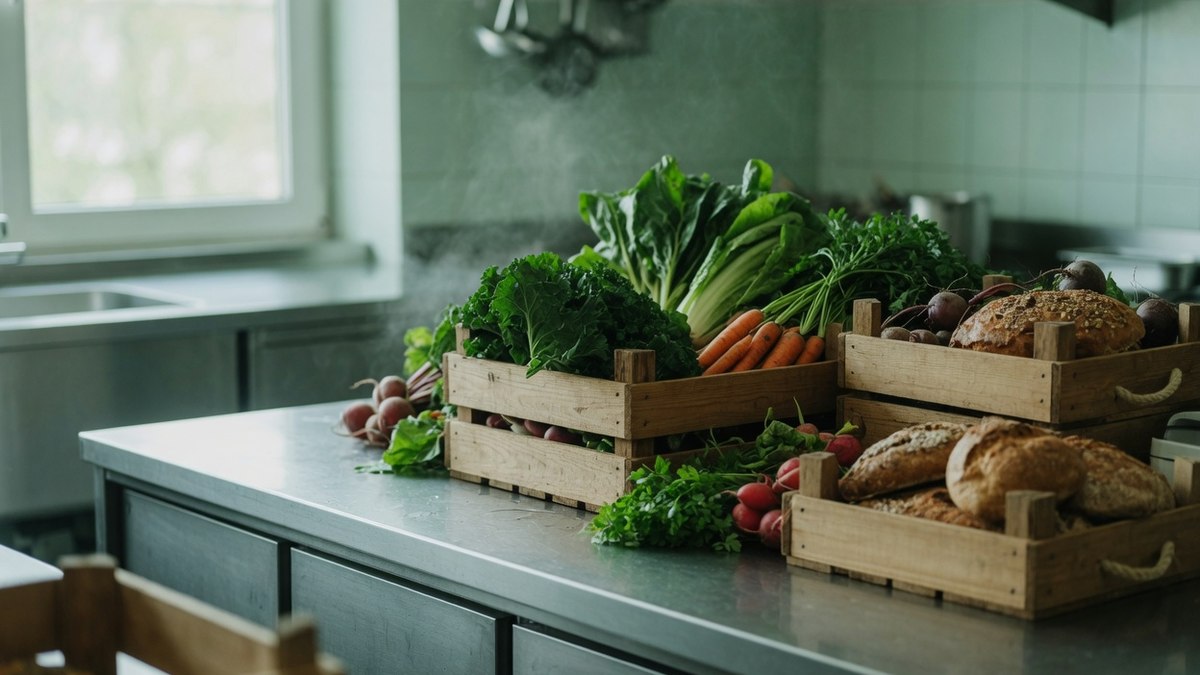
Luxembourg likes to call itself the heart of Europe. It is less than two hours by road from Brussels, Paris or Frankfurt, and it has a cargo airport and dense road, rail and river networks. This central position is a standard argument for logistics and finance, but it is less often made for food. Yet Luxembourg's organic sector, long treated as a matter for farmers or associations, is now an economic and CSR issue that business decision-makers can no longer ignore. A new national action plan, rising expectations from employees and customers, and new opportunities for local sourcing all point the same way.
A sector that is scaling up, without reaching its ambitions
The results are mixed. The first national action plan for organic farming, the PAN-Bio 2025 (Plan d'action national pour l'agriculture biologique), launched in 2020, aimed for 20% of utilised agricultural area to be organic by the end of this year. According to the Ministry of Agriculture, Food and Viticulture, that target was not met. The trend is still significant: organic farmland grew from 6,429 hectares at the end of 2020 to around 12,264 hectares in December 2025, an increase of more than 90% in five years. In 2022, organic farming accounted for 6.9% of the country's utilised agricultural area, supported by 148 certified producers counted a few years earlier, including farmers, market gardeners, winegrowers, fruit growers and beekeepers.
Against this background, the government presented the PAN-Bio 2026-2030 in Stegen on 22 December 2025, led by Agriculture Minister Martine Hansen. The new target is more modest but openly presented as realistic: increase certified organic area by about one percentage point each year, reaching close to 15% of utilised agricultural area by the end of 2030. The plan has four pillars: creating favourable conditions for organic expansion, supporting producers as they convert and maintain their practices, strengthening value chains and commercial outlets, and promoting consumption while organising how the sector is governed. Particular emphasis is placed on partial conversion of farms, which is seen as a more realistic way to bring in new producers.
What the new plan changes for businesses
The most concrete part for businesses concerns institutional catering. By 2030, the public body Restopolis, which runs a large share of institutional catering in Luxembourg, must source 80% of its products from Luxembourg agriculture, including 30% organic. School canteens already serve close to 70% local products, and the administration intends to extend this approach to other institutional catering facilities. For companies that run their own staff restaurant, either in-house or through a contractor, this creates both pressure and an opportunity: expectations about the origin and production methods of meals served to staff are rising, and local supply channels are taking shape to meet them.
Strengthening value chains, the second pillar of the PAN-Bio 2026-2030, also opens up room for Luxembourg food SMEs, wholesalers and distributors. Since 1988, the country has had its own label, Bio Lëtzebuerg, historically backed by the organic farmers' cooperative BIOG. Its specifications are stricter than the EU organic regulation, notably on animal welfare. For a company looking to secure traceable and distinctive supplies, whether for its canteen, its events or its corporate gifts, this label is a clear reference point. Further reading on this topic: Circular economy in Luxembourg.
CSR and brand image: already fertile ground
Luxembourg presents decision-makers with an interesting paradox: organic production is still modest in volume, but per capita consumption has historically been among the highest in the world. In 2017 the country ranked fourth worldwide on this measure, behind Switzerland, Denmark and Sweden. This gap between consumer appetite and local production capacity means that demand already exists, among employees as well as B2B and retail customers, before local supply has fully caught up.
For companies committed to corporate social responsibility, this context makes the case easier. The ESR label (Entreprise Responsable, or Responsible Business), awarded by the Institut national pour le développement durable et la responsabilité sociale des entreprises (the national institute for sustainable development and CSR), already recognises the efforts of Luxembourg companies on responsible purchasing and environmental impact. Including a share of organic and local products in the staff restaurant, internal events or client gifts becomes a simple, measurable lever to highlight in this kind of approach, without a complete overhaul of purchasing practices.
A central position to use, not just endure
Luxembourg's location, often cited for financial or industrial logistics, also works in favour of sustainable food. Situated between two of Europe's largest consumer markets, Germany and France, with multimodal infrastructure and a stable regulatory framework within the European Union, the country has what it takes to become a regional redistribution hub for organic products, not just a consumer market. For Luxembourg companies in food, logistics or distribution, this position can become a real competitive advantage against neighbouring markets where the organic sector is already better organised.
Key takeaways for decision-makers
- The PAN-Bio 2026-2030 sets a clear course to 2030, with precise targets for institutional catering: a useful testing ground before rolling out a responsible purchasing policy internally.
- The Bio Lëtzebuerg label provides a local traceability benchmark that is stricter than EU organic standards, relevant for any company seeking distinctive supplies.
- Demand from employees and customers for local, organic food is already strong in Luxembourg, an immediate foundation for any CSR approach, without waiting for local production to fully match demand.
- The country's central position in Europe remains an underused asset for food and logistics companies that want to position themselves in regional distribution of organic products.
Luxembourg's organic sector has not met the targets set in 2020. It has nonetheless laid foundations (a label, supply channels, an engaged administration) on which companies can now build purchasing policies that go further than statements of intent.