Marketing··4 min
Business gifts: what arts2be leather goods can teach Luxembourg companies
Leather bags, art and local traceability: the Belgian brand arts2be points to a more responsible approach to corporate gifts.
Translated from French · Lire l'original en français
The generic business gift, a logo-printed gadget made on the other side of the world, is falling out of favour with Luxembourg's senior management teams. Now that the European CSRD directive is pushing a growing number of companies, including in Luxembourg, to document their purchasing practices, the choice of an object given to a client or an employee becomes a brand signal in its own right. The Belgian leather goods house arts2be, which combines leather bags with artists' work, offers a useful case study for rethinking the question.
Arts2be, where leather goods meet the art gallery
Founded in 2015 by Sophie Ruelle, arts2be describes itself as both an art gallery and a leather goods house. The concept is simple to state and rare to execute: works by contemporary artists from Belgium and elsewhere in Europe are printed or reproduced on high-end leather handbags, clutches and pouches. The brand works with around ten carefully selected artists, which turns each collection into a form of wearable art curation rather than a mere fashion accessory.
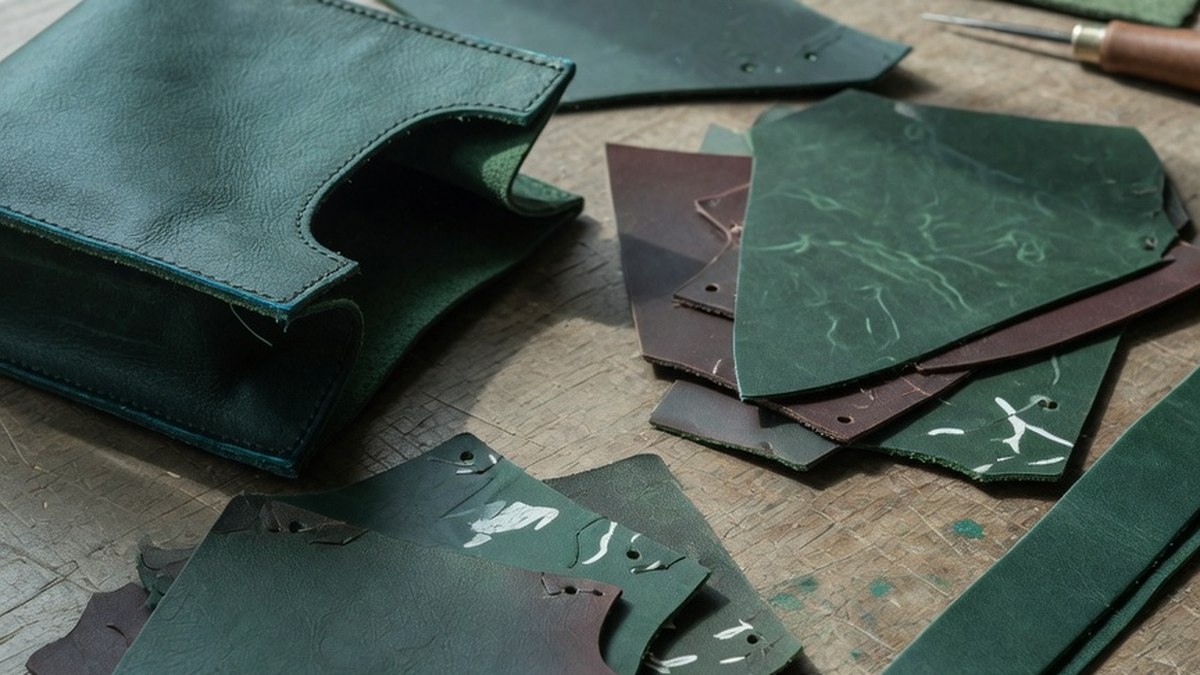
The pieces are handmade in Belgium, in the family workshop La Maison Ruelle, which has more than forty years of leatherworking expertise. They are produced in limited runs, and arts2be also offers fully bespoke creations: with the designer's help, the customer chooses the bag model, the colour, the leather and the artwork to be applied to it.
Traceability that speaks to responsible buyers
For its materials, arts2be sources from European tanneries, which makes it possible to trace the origin of the leather and keep better control of the production's carbon footprint, a criterion that purchasing departments scrutinise more and more closely. Combined with local rather than offshore manufacturing, this approach reflects a logic of artisanal craftsmanship and short supply chains, far removed from the globalised logistics behind most mass-distributed promotional items. Further reading on this topic: The circular economy in Luxembourg.
In 2017 this approach earned the Maca d'Or, an award that recognised the originality of the concept and the artistic value of the brand's creations. For a company, this kind of recognition carries weight when it has to justify internally the choice of a supplier less well known than a promotional goods wholesaler.
Why this model interests Luxembourg decision-makers
Luxembourg has an unusually high concentration of regional headquarters, consultancies, private banks and family offices, organisations for which the business gift remains a very live ritual: an end-of-year thank you, a gesture towards a strategic client, a token of appreciation at a closing or a signing. In this environment, giving an object mass-produced in unlimited runs in Asia sends a message that increasingly contradicts the CSR commitments displayed elsewhere on the company's corporate website. Further reading on this topic: The organic sector in Luxembourg.
An accessory like those made by arts2be (a one-off or limited-run piece, traceable materials, documentable craftsmanship) meets a simple requirement that many professional buyers now set themselves: being able to explain, in one sentence, why this object was chosen over another. The artistic dimension adds a second, less often mentioned benefit: a gift that tells a story naturally stands out from the disposable promotional item, and stays longer on a desk or in a work bag.
Points to watch before getting started
This kind of approach is not without constraints for a company. Small-batch artisanal production means longer lead times than an industrial order, a higher unit budget, and a production capacity that cannot always deliver large volumes at short notice. These constraints call for planning ahead: an end-of-year gift for a small VIP clientele is a better fit than mass distribution at a trade show.
For Luxembourg purchasing or marketing managers who want to explore this option, the question to ask is not only “ce cadeau est-il joli” (“is this gift attractive”), but “ce cadeau raconte-t-il quelque chose de cohérent avec l'image que nous voulons projeter” (“does this gift say something consistent with the image we want to project”). An artisanal supplier able to trace its materials and document its process provides an answer to that question that few standardised goodies catalogues can match.
Key takeaways
Arts2be is not positioned as a corporate gift supplier: the brand primarily targets private customers looking for exceptional pieces. But its model (local craftsmanship, traceable materials, collaboration with artists, limited production) illustrates a direction Luxembourg companies can follow when rethinking their own goodies suppliers: favouring rarity and meaning over volume, and partners able to justify every link in their production chain. At a time when the sincerity of CSR commitments is increasingly checked, including through the objects a company gives away, this shift deserves to be put on the table at the next budget decision.