Marketing··4 min
EUCYS 2026: the Luxembourg deep-tech talent pool that companies are letting slip away
A pupil from the International School Luxembourg has won a major European science prize for a hypersonic engine. For Luxembourg HR and innovation leaders, what matters is not the individual achievement but the pool of young deep-tech talent it reveals, which remains largely untapped.
Translated from French · Lire l'original en français
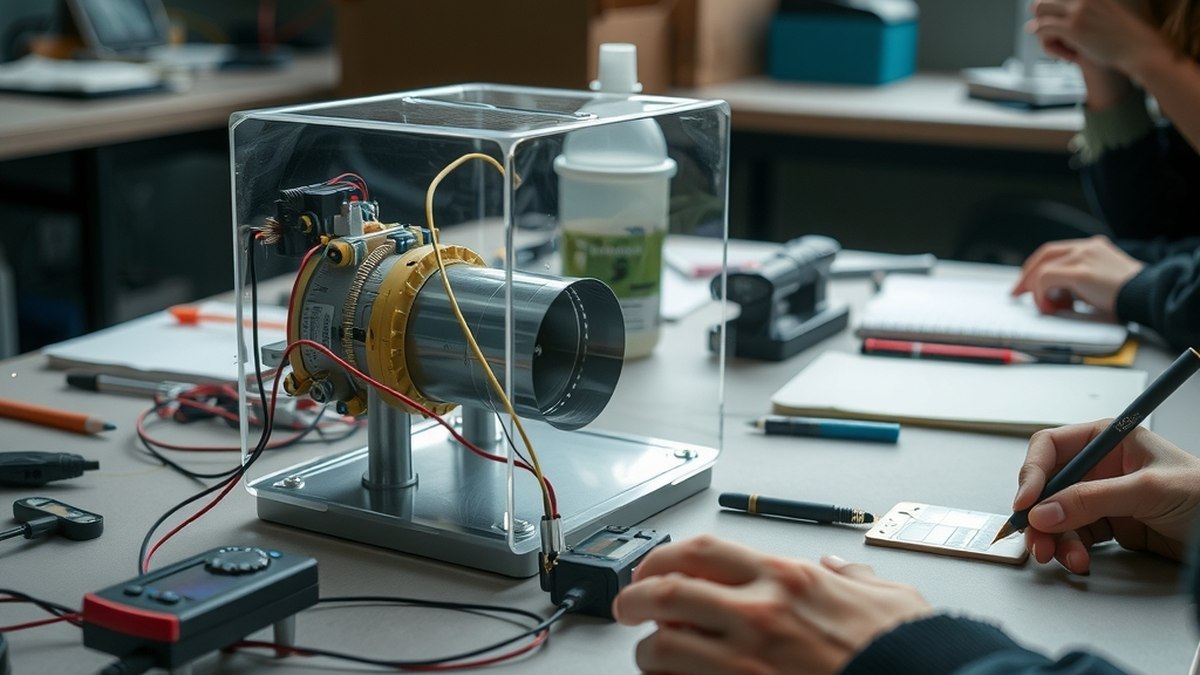
A 15-year-old pupil from the International School Luxembourg has won the Ellison Scholars Prize at the 37th European Union Contest for Young Scientists (EUCYS), held in Kiel from 22 to 27 September 2026. Behind this individual award lies a pool of young deep-tech talent that Luxembourg develops every year through a national competition, and that the country's companies still make too little use of. For HR and innovation decision-makers, that is where the actionable information lies.
A scramjet tested at over 3,000°C by a secondary school pupil
According to Chronicle.lu, Rodion Zaichikov was rewarded for a low-cost hypersonic wind tunnel project, designed to test a scramjet engine exposed to temperatures above 3,000°C. L'essentiel and Le Quotidien confirm the profile: a pupil at the International School Luxembourg behind a highly technical project of the kind usually reserved for aerospace research laboratories. This prize is not an isolated case: Silicon Luxembourg reports that other young people from Luxembourg were also recognised at this edition of EUCYS, notably for a portable cancer detection device. The Grand Duchy is therefore producing several specialist profiles in the same year, in very different fields (aerospace, medtech), which points to a talent pool broader than a single media highlight.
Jonk Fuerscher, the gateway to Europe
This result did not come out of nowhere. Rodion Zaichikov's project was selected to represent Luxembourg at EUCYS through the 55th Jonk Fuerscher national competition, held on 13 and 14 March 2026 by the Fondation Jeunes Scientifiques Luxembourg (FJSL), according to fjsl.lu and Chronicle.lu. The national competition works as an annual funnel: every March, it identifies the best science projects by Luxembourg secondary school pupils before sending them to compete at European level. For a company looking for profiles in engineering, applied physics or materials science, it is a recurring, identifiable event, not a one-off opportunity.
A partnership few Luxembourg companies take up
The FJSL runs a partnership and sponsorship programme open to companies, called “Les Amis des Jeunes Scientifiques Luxembourg” (“Friends of the Young Scientists Luxembourg”), described on the fjsl.lu/amis page. It is an ongoing activity with no fixed deadline, which leaves companies free to get involved at their own pace. Becoming an FJSL partner allows a company to associate its brand with young people's scientific research before they even enter the job market. It is an option that communication departments and HR leaders at Luxembourg technology companies still rarely consider, even though the scheme has existed for years.
Three practical levers for HR and innovation decision-makers
Beyond financial sponsorship, several practical actions are within reach of a Luxembourg company that wants to position itself on this talent pool:
- become a partner or sponsor of the FJSL through the “Les Amis des Jeunes Scientifiques Luxembourg” programme (fjsl.lu/amis);
- offer an internship or technical mentoring to Jonk Fuerscher and EUCYS winners, directly linked to their project field;
- use this talent pool as an employer branding argument for space and deep-tech companies already established in Luxembourg, a sector that includes SES, the Luxembourg Space Agency and LuxSpace.
The Luxembourg space and deep-tech sector has a constant need for profiles in aerospace engineering and applied physics, exactly the type of skills the Jonk Fuerscher competition brings to light every year, starting at secondary school. Engaging with this talent pool early, rather than discovering it once candidates have left to study and work abroad, is as much a question of timing as of HR strategy.
The right time to get involved
The European Commission, which organises EUCYS, has itself showcased the 2026 edition as a window onto the continent's next generation of scientists. The next Jonk Fuerscher will take place on 13 and 14 March 2026: this is a natural deadline for a company that wants to make first contact with the FJSL before the next edition, rather than waiting for media coverage of the next winner. Luxembourg companies recruiting in engineering, space or materials science also have other levers to structure their talent and innovation policy, as shown in our article on the deep-tech gems spotted at Healthcare Week Luxembourg 2026. For companies wishing to fund research collaborations with young talent of this kind, Luxinnovation's Fit 4 programmes also remain the most direct route to public funding.