Tech··4 min
Sustainable Development Goals: what Luxembourg's space hub offers businesses
Earth observation, satellite data, climate: how Luxembourg's space ecosystem serves the SDGs and what decision-makers can take from it.
Translated from French · Lire l'original en français
The Grand Duchy does not launch rockets, but it carries real weight in what happens once in orbit. Satellite communications, Earth observation, space resources law: the ecosystem built in Luxembourg over the past forty years feeds directly into several of the seventeen Sustainable Development Goals (SDGs) set by the UN for 2030. For Luxembourg business leaders, this goes beyond national pride: it offers practical access to data and partnerships that can support a company's climate, risk and compliance strategy.
The link between space and the SDGs is far from anecdotal. A joint study by UNOOSA (United Nations Office for Outer Space Affairs) and the European GNSS Agency, published in 2018, found that 65 of the 169 targets that make up the seventeen SDGs benefit directly from Earth observation or satellite navigation systems. Sustainable agriculture, water management, disaster monitoring, public health, climate action: these targets rely on data flows, a significant share of which pass through infrastructure or operators based in Luxembourg.
SES, the historical foundation
It all began in 1985, when the Société européenne des satellites (SES) was founded in Betzdorf. Having become one of the world's largest satellite operators after acquiring its American competitor Intelsat, SES now handles a significant share of global communications and broadcasting, including in areas poorly served by terrestrial networks. Access to connectivity is a precondition for several SDGs: distance learning, connected health, digital inclusion of remote regions. A Luxembourg operator thus finds itself, without having set out to do so, at the heart of SDG 9 (industry, innovation and infrastructure) and SDG 10 (reduced inequalities).
From SpaceResources.lu to Earth observation
Luxembourg then built a second layer of strategy: the SpaceResources.lu initiative, launched in 2016 by the Ministry of the Economy, positioned the country as a pioneer in the exploration and sustainable use of space resources, with a dedicated legal framework and the European Space Resources Innovation Centre (ESRIC). In May 2026, Space Resources Week marked ten years of the initiative and five years of ESRIC, with record attendance according to the Luxembourg government.
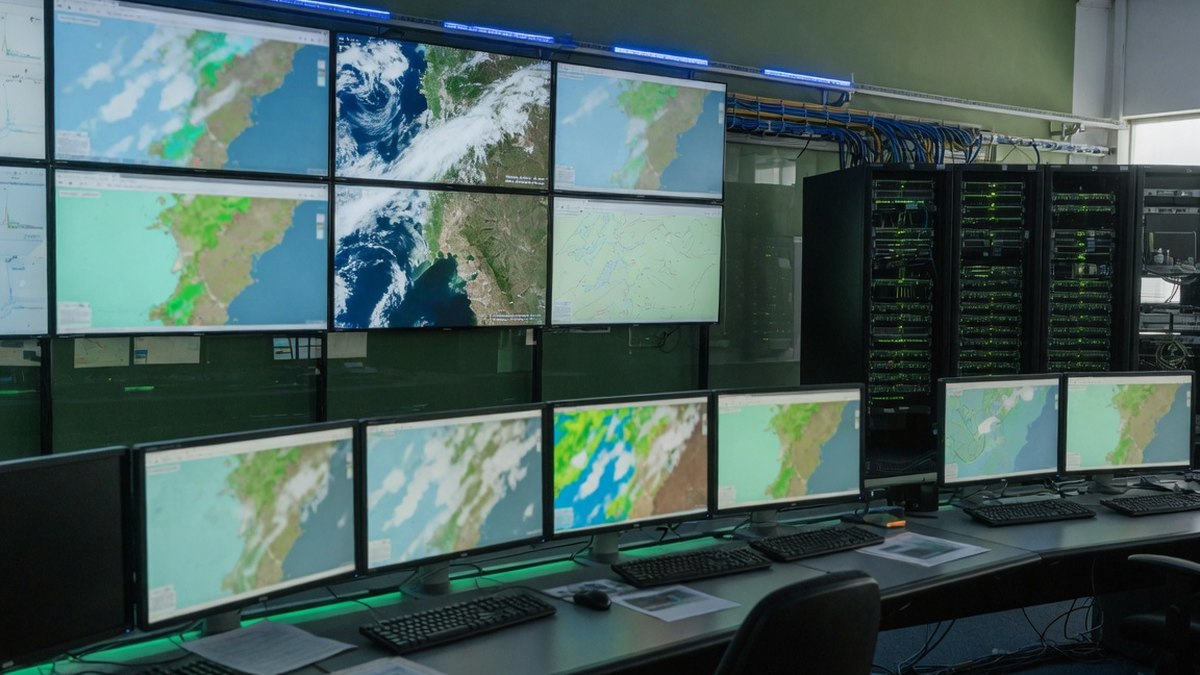
The Luxembourg Space Agency (LSA), created in 2018, has for its part developed a national data centre, stemming from the LuCoIIGS project, which provides a reliable access point to imagery from the European Copernicus programme. In practice, this allows organisations based in Luxembourg to develop applications for climate monitoring, urban planning, precision agriculture or disaster management using Earth observation data that was previously harder for smaller organisations to exploit.
An ecosystem that has grown almost tenfold in twelve years
The business base has followed. According to figures cited by the Luxembourg authorities, the space ecosystem grew from sixteen companies and around six hundred jobs in 2012 to more than eighty companies and 1,400 employees in 2024. Players active in applications relevant to the SDGs include Spire Global, which operates nano-satellites for maritime and weather data, LuxSpace for maritime surveillance, and companies focused on space materials and manufacturing such as Euro-Composites, Redwire Space and Gradel. More recent players, such as Hydrosat in water management through satellite imagery or Maana Electric in solar technologies, round out a landscape that now extends well beyond the historical telecommunications business.
Space meets sustainable finance
As a sign that the sector is actively seeking SDG-related outlets, the LSA announced in May 2025 a collaboration with the European Investment Bank around an initiative called “Space for Finance”. The stated aim is to harness Europe's strengths in Earth observation and navigation to help financial players better document their transparency and sustainability efforts, at a time when non-financial reporting requirements are tightening for companies established in Luxembourg, as elsewhere in Europe.
Key takeaways for Luxembourg decision-makers
For a company that does not work in the space sector, three practical uses already emerge from this ecosystem:
- Climate and ESG reporting: Copernicus data, available through the LSA data centre, makes it possible to document physical exposure to climate risk (flooding, drought, heat islands) at industrial or logistics sites, an exercise increasingly expected by investors and regulators.
- Supply chain and agriculture: satellite monitoring of crops, maritime fleets or infrastructure helps anticipate supply disruptions, a direct concern for Luxembourg companies that depend on international flows.
- Connectivity for remote subsidiaries: for groups operating in areas with poor terrestrial coverage, the satellite communication capabilities developed locally remain a pragmatic option for business continuity.
Luxembourg has neither rockets nor a spaceport, but over forty years it has built a complete chain running from satellite operator to a legal framework for space resources, by way of an Earth observation data centre. This chain overlaps directly with the targets the UN has set for 2030. For Luxembourg business leaders, the question is no longer whether the national space sector exists, but which of these tools, already available locally, can feed into their own sustainability strategy.