Tech··5 min
Fibre and 5G in Luxembourg: the ILR 2025 figures to check before moving in
At the end of 2025, fibre covers most of Luxembourg, but around 16% of premises still cannot be connected directly, and 5G does not yet reach every area. Check both before you sign a lease or an operator contract.
Translated from French · Lire l'original en français
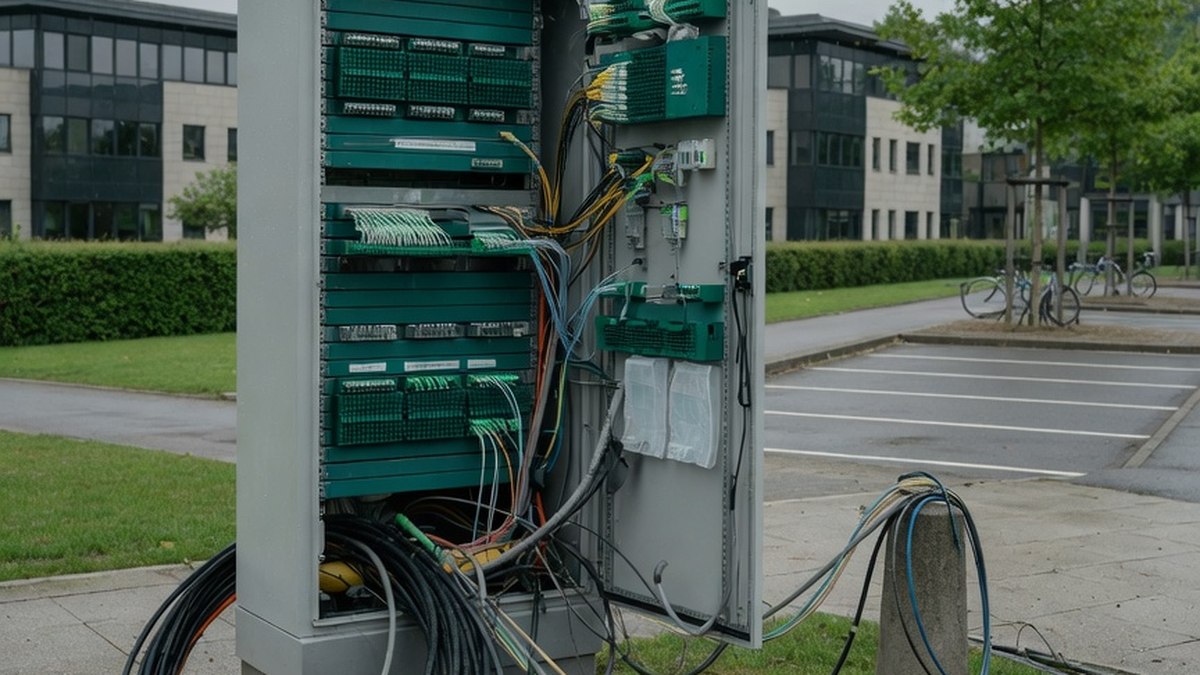
At the end of 2025, fibre optics account for 72.8% of fixed Internet access lines in Luxembourg, which makes coverage look almost complete. Yet around 16% of premises in the country still cannot be connected directly. These are often in rural areas or older neighbourhoods, and some business parks fall into these categories. For an executive looking for premises or negotiating an operator contract, this gap is worth checking before signing.
Fibre coverage close to saturation, but not everywhere
According to the ILR's 2025 telecoms report, presented on 15 June 2026, fibre optics (FTTH) made up 72.8% of all fixed Internet access lines at the end of 2025, up 11.4% year on year. Very high-speed connections (at least 1 Gbps) reached 78,900 at the end of 2025. That is 31,600 more in one year, a growth of 66.9%. These figures show that the consumer market has almost finished switching to fibre, but they tell you nothing about whether a given business address can actually be connected. That is where companies need to be careful.
The ILR's 2024 report, published in June 2025, states that fibre network coverage (the percentage of premises that can actually be connected) reaches 83.8% of the country's households and premises. In other words, nearly 16.2% of Luxembourg addresses cannot yet be connected to fibre. This mainly affects rural areas and some older neighbourhoods of the capital, and business parks further from the centre can fall into these categories. A company site in an outlying or sparsely populated area is therefore not automatically eligible, even though the national statistics suggest near-complete coverage.
| Indicator | Value at end of 2025 | Change or target |
|---|---|---|
| Fibre (FTTH) share of fixed access lines | 72.8% | +11.4% year on year |
| Premises eligible for fibre (2024 report) | 83.8% | ~16.2% not eligible |
| Very high-speed connections (≥1 Gbps) | 78,900 | +31,600, or +66.9% |
| 5G coverage (population) | 78.7% | 2030 target for inhabited areas |
| Telecom operators' investment | 125.3 million euros | -10.6% year on year |
| Average mobile data use | 13.1 GB/month | +11.4% |
Check your address's eligibility before you commit
The good news is that you do not have to rely on an operator's sales promises to check. The ILR keeps an up-to-date public map of fibre and 5G coverage that you can search address by address on myilr.lu and on the Géoportail national (the national geoportal). Before signing a commercial lease or an operator contract, you can check whether the premises can actually be connected, instead of relying on a marketing coverage map that groups together large areas. For a company that depends on a stable fixed connection, the check takes a few minutes and can prevent an unpleasant surprise after signing.
This verification system rests on a specific legal framework. The law of 22 March 2017 sets out three ways to speed up the rollout of ultra-high-speed networks. First, existing electricity, gas and water infrastructure can be reused to lay fibre at lower cost. Second, a national register of works coordinates building sites. Third, co-ownership rules are simpler: a simple majority now authorises the internal cabling of a building, instead of the three-quarters majority previously required. These mechanisms partly explain the rapid growth of fibre observed by the ILR, but they work more slowly in areas where no existing infrastructure can be reused. Further reading on this topic: Data centres and electricity in Luxembourg.
5G is advancing, but the 2030 target has not been reached yet
On the mobile side, 5G covers 78.7% of the population at the end of 2025, according to the same figures from the ILR and gouvernement.lu. The government aims to cover all inhabited areas with 5G by 2030, in line with the European connectivity agenda. Some companies depend on a mobile connection or connected devices in rural or border areas (warehouses, logistics sites, IoT sensors). For them, the 2030 deadline means that current coverage is not guaranteed everywhere and will keep changing over the coming years. Here again, testing actual coverage at the address through the ILR map is more reliable than an operator's coverage map.
Average mobile data use is also rising, at 13.1 GB per user per month, up 11.4%. However, telecom operators are investing less while usage grows: according to the ILR, their investment totalled 125.3 million euros in 2025, down 10.6% year on year. Rising usage alongside slower investment is a warning sign for companies in the least densely populated areas, where the last coverage extensions depend directly on these budgets.
Checklist before signing a lease or operator contract
If you are setting up, relocating or renegotiating your connectivity, a few practical checks can help you avoid unpleasant surprises:
- Check the fibre and 5G eligibility of the exact premises on myilr.lu or the Géoportail national before signing anything
- Compare the business offers of the main operators (POST, DEEP, Tango and Orange), rather than only looking at consumer offers
- Test actual 5G coverage at the address, especially in rural or border areas, rather than relying on marketing maps
- Allow time for connection if the area is not yet covered, especially for the 16% of premises not eligible for fibre
These checks matter most for companies that rely on digital channels to sell. A reliable connection is a basic requirement for any online activity, as we explained in our article on e-commerce in Luxembourg. Fibre and 5G are expanding quickly in Luxembourg, but unevenly from one area to another. Checking before you commit remains the simplest way to secure your company's connectivity.