Tech··3 min
Data centres in Luxembourg: the country has the connectivity, what it lacks is electricity
The Grand Duchy has built a reputation as a safe hosting location at the heart of Europe. But new projects are running into a question that fibre cannot answer: where will the power come from?
Translated from French · Lire l'original en français
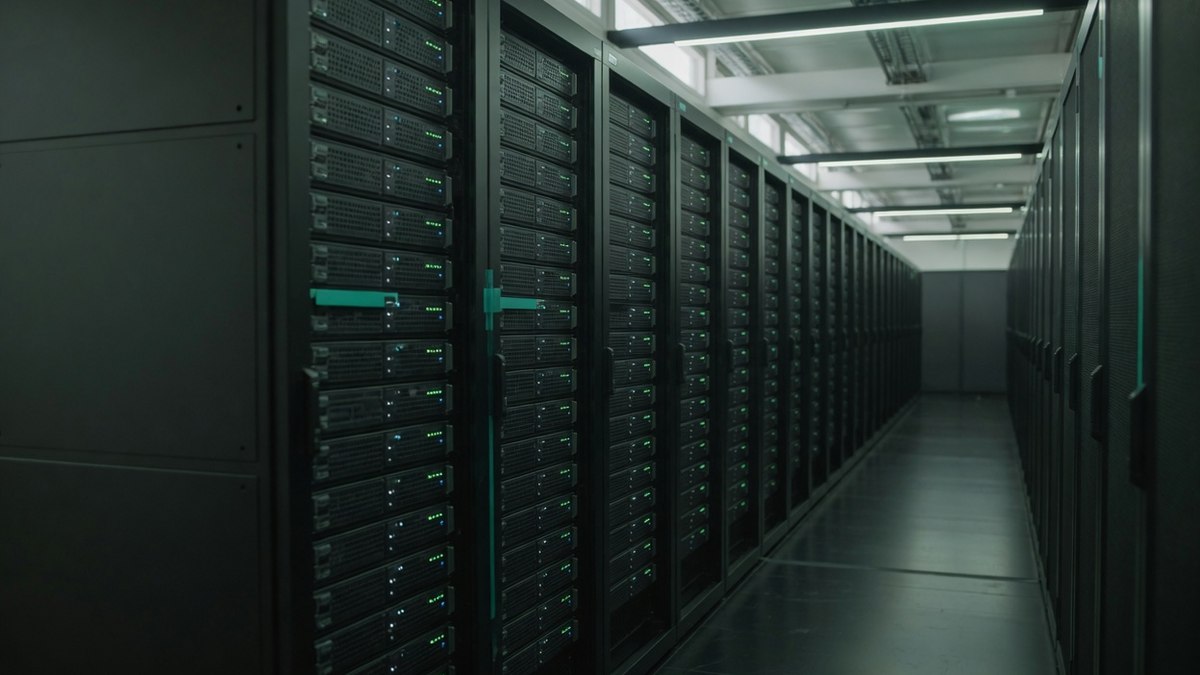
Ask an infrastructure manager why their company hosts its data in Luxembourg and you will almost always get the same list: political stability, proximity to Frankfurt and Paris, latency to Amsterdam, a legal framework that has managed to attract financial players, and a fibre density that would put most neighbouring regions to shame. The country has around twenty data centres, on an area barely larger than that of the French département of the Ardennes.
Then ask about the next projects, and the tone of the conversation changes.
The bottleneck is no longer the network
For fifteen years, the constraint was connectivity. It has been removed, partly thanks to public investment in international backbones and to the arrival of operators that turned Luxembourg into a transit point between Europe's major hubs. LuxConnect, owned by the State, has built and is filling its sites in Bettembourg and Bissen; private operators have followed.
The constraint now is power supply. A new-generation data centre designed for artificial intelligence workloads requires electrical capacity far beyond that of the colocation rooms of the 2010s. Where a conventional rack used a few kilowatts, dense racks fitted with graphics accelerators need ten times as much, along with the cooling that goes with it.
Yet Luxembourg imports most of its electricity. The transmission grid is robust but sized for a country of 680,000 inhabitants, not for hosting, within a few years, several sites the size of those being built around Frankfurt. Lead times for connection to the high-voltage grid are measured in years, and every new project now has to talk to Creos before it even starts looking for land.
What MeluXina has shown
The national supercomputer, installed in Bissen and operated by LuxProvide, is a telling example. Commissioned in 2021, it gave the country a European-class computing tool and a showcase for attracting research projects and companies. It also highlighted what a high-performance computing infrastructure costs in electricity and cooling, even when it is well designed.
The Bissen site has one particular feature: it was designed to recover part of the heat it produces and to rely on renewable sources. This is exactly the direction current specifications are taking. A data centre project that arrives today without a heat recovery plan and without a green energy supply contract has little chance of succeeding, either with the authorities or with clients who must themselves report on their carbon footprint. Further reading on this topic: Luxembourg's space hub and the SDGs.
Three options that keep coming up in discussions
Long-term power purchase agreements. Large operators sign multi-year agreements with renewable energy producers, sometimes outside the country, to secure both volume and price. This is common practice in Ireland and the Netherlands, and still emerging here.
Waste heat as an urban planning argument. A data centre can heat a neighbourhood. Several municipalities see this as a way to speed up their heating networks and are starting to include the option in their development plans. It is slow, but it is one of the few levers that turns a constraint into a local asset.
Leaner workloads. This is the option least talked about, because it depends on clients more than on hosting providers. A significant share of installed capacity is used to run underused servers, forgotten test environments and copies of data that are never accessed. Luxembourg operators that offer an audit of this consumption before selling additional square metres are still rare.
Why this is a question of sovereignty
The debate on European digital sovereignty often focuses on the law applicable to data and on dependence on American cloud providers. It overlooks a prerequisite: to host in Europe, you need electricity in Europe, in the right place, at the right time. Luxembourg has a real advantage in being small, central and responsive. It also has a physical limit that no legal argument can get around.
The coming months will show whether the announced projects secure their grid connections. We have asked the country's main operators about their current lead times and will publish their responses.