Marketing··5 min
Team building and wellbeing: why gimmicky activities are no longer enough in Luxembourg
Quality of working life is declining in Luxembourg. For business leaders, team building has to move beyond the gimmick and tackle the real causes of employee distress.
Translated from French · Lire l'original en français
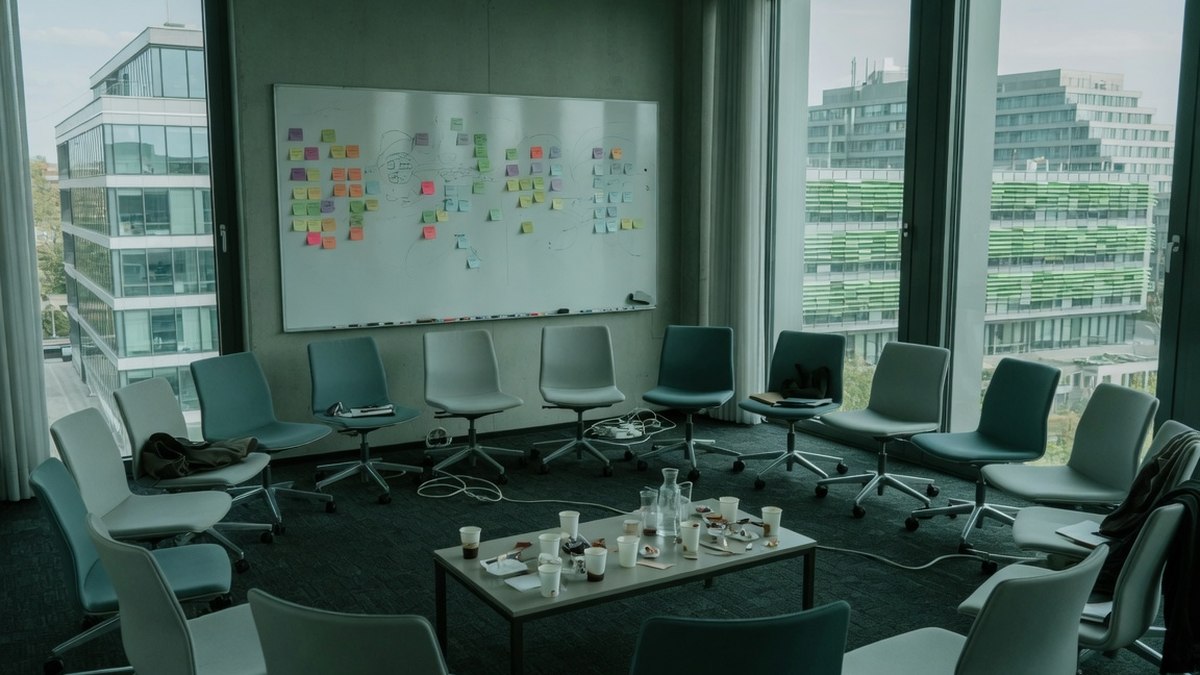
Every rentrée (the autumn return to work) brings its share of seminars, escape games and away days billed as team cohesion moments. In Luxembourg, though, the figures tell a different story: quality of working life is not improving, it is declining. For HR departments and business leaders, the question is no longer whether to organise team building, but whether it targets the right problem.
According to the Quality of Work Index 2025, a survey conducted by the Chambre des salariés (Chamber of Employees) in cooperation with the University of Luxembourg and the infas institute, the overall quality of work index stands at 53.4 points, its lowest level since 2014, compared with 54.9 points in 2022. More than half of the employees surveyed, 51%, report psychological distress that is rising or already high. This distress affects women (35%) more than men (24%), and hits single parents particularly hard (37%). The study points to a work-life balance that is harder to achieve, a workload that is intensifying, a feeling of no longer being heard in company decisions, and training opportunities that are becoming scarcer.
This local picture matches a global trend. Gallup's State of the Global Workplace 2025 report, based on more than 227,000 employees surveyed in over 160 countries, shows that only 41% of employees feel their work is aligned with their organisation's mission, and that just 26% say they are properly recognised for their efforts. In other words, the gap between what teams expect and what companies offer them keeps widening, and no one-off activity can close a gap of that kind.
The symptom is not a lack of conviviality
This is where HR departments need to change their angle of reasoning. An after-work drink or a company pétanque tournament does not address an excessive workload, management that does not listen or a lack of recognition. These activities create a spike in conviviality that fades by the following Monday if the structural causes of distress remain untouched. The risk, documented by several practitioners of quality of working life and working conditions (QVCT), is even that they produce the opposite effect: an employee in distress perceives a costly, festive seminar as a sign that leadership is disconnected from their actual day-to-day reality.
The Institut luxembourgeois de la qualité de vie au travail (ILQVT, Luxembourg Institute for Quality of Working Life) also stresses a useful distinction: quality of working life is not just about perks or moments of relaxation, it is built on the very organisation of work, the autonomy given to teams, clarity of roles and recognition from managers. It is a long-term undertaking, not an annual events budget.
The cost of inaction can also be read in absenteeism statistics. According to the dashboard of the Inspection générale de la sécurité sociale (IGSS, General Inspectorate of Social Security), the sickness absence rate among private sector employees stood at 4.86% in 2025. High absenteeism is almost never purely a matter of individual health: it is also, in part, a leading indicator of disengagement and burnout.
What actually works for decision-makers
Several approaches, consistent with the available data, can steer team building towards a real impact on wellbeing rather than a mere event:
- Move away from the single annual format. Short, regular team check-ins focused on workload and everyday irritants often carry more weight over time than a one-off seminar, however successful.
- Make management the first lever. The criteria measured by Gallup (clear expectations, access to resources, recognition, managerial support, meaningful work) depend first and foremost on the direct manager, not on an events budget.
- Measure before acting. A simple internal barometer, run before and after an initiative, shows whether the action has an effect on engagement or remains anecdotal.
- Involve employees in choosing formats. An activity imposed from above, however well intentioned, is perceived differently from an initiative co-designed with the teams concerned.
- Address the inequalities revealed by the studies. Single parents and women report more pronounced distress: measures on flexible hours or parental responsibilities often have more effect than a standard group activity.
On the ground in Luxembourg, the Best Workplaces Luxembourg ranking, published by Great Place To Work, shows that external recognition of quality of working life rests on a demanding methodology: an anonymous questionnaire, the Trust Index, combined with an audit of internal practices, with a minimum threshold of 65% positive responses required for certification. The companies recognised each year, some of them certified for more than ten consecutive editions, are distinguished not for their one-off events but for the consistency of their management practices.
The role of the chief happiness officer, without reducing it to entertainment
The chief happiness officer role, increasingly common in organisation charts, should not be limited to organising events. Its real value is measured by underlying indicators: absenteeism rate, staff turnover rate, internal survey results, level of engagement. This framework is what makes it possible to distinguish an investment in wellbeing from a simple leisure budget.
For Luxembourg business leaders and HR managers, the message of the 2025 data is clear: team building retains its full value as a moment of cohesion and recognition, but it can no longer be seen as a sufficient response to the deterioration of quality of working life. It must fit into a broader policy, linked to the organisation of work, local management and quantified monitoring, or it will remain a sticking plaster over a deeper fracture.